* * * * * English version after this post * * * * *
Buenas tardes,
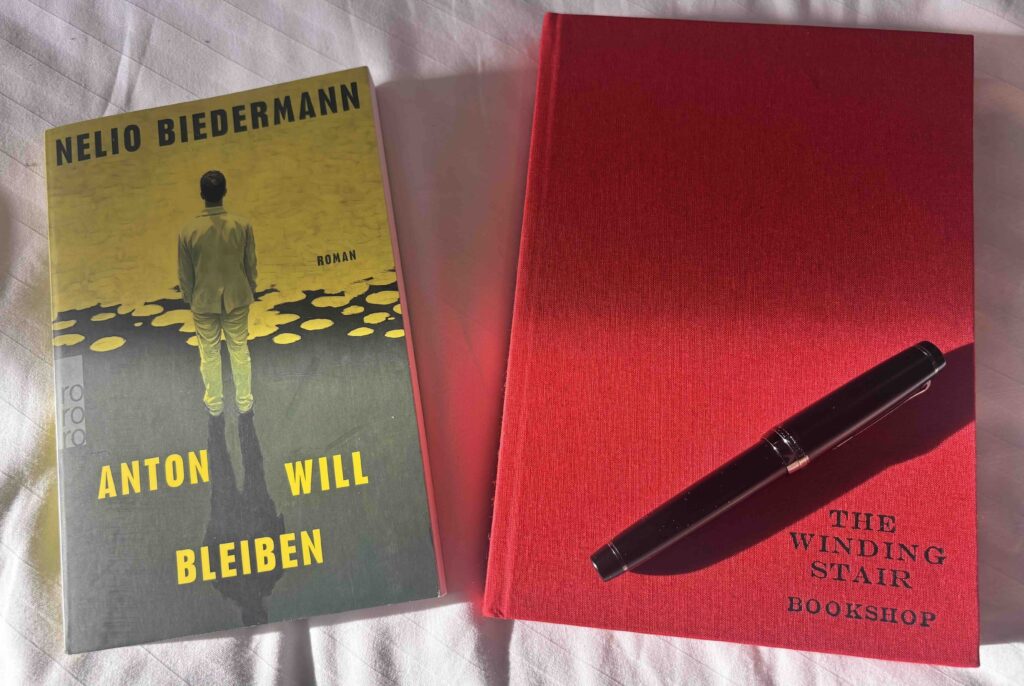
Cada una de las tres cosas que ves en la foto de cabecera tiene su historia.
El cuaderno lo compré en una librería-café de Dublín que siempre me ha encantado. Dormía desde hace un año en una estantería, hasta que decidí llevármela al barco desde el que escribo. Hace un recorrido por la costa dálmata mientras un pequeño grupo hacemos una formación de una semana con Gabor Maté.
La pluma Sailor la compré tiempo atrás, pero hace veinte años que no utilizo la estilográfica, desde que opté por la practicidad del roller. Una oportunidad como esta me ha parecido adecuada para recuperar el instrumento con el que escribí —a mano— mis primeras novelas.
Hace muchos años que mi actividad es escribir y hablar en todas partes, aunque me gusta mucho más leer y escuchar. Por eso esta primera mañana de formación me he sentido muy feliz siendo nuevamente un estudiante. Gabor es un genio del debate y hace preguntas tremendas, así que he disfrutado tomando notas y observando lo que pasa en el grupo, al que me uní invitado por mi compañera.
Regresar a mi condición de estudiante me ha hecho recordar con nostalgia cuando cursaba con entusiasmo Filología Alemana. Mi pasión era leer en su idioma original a Kafka, a Goethe, también a los nuevos autores que llegaban a las librerías. Hace un cuarto de siglo que no hablo alemán con nadie; también he dejado de leer libros en esa lengua.
Al sentir que estaba perdiendo algo importante, he decidido tomar la primera novela del jovencísimo Nelio Biederman, que se ha hecho famoso mundialmente con Lázár. Su libro de debut no está aún en nuestro idioma y puede traducirse como Anton quiere permanecer. Va sobre un hombre al final de su vida que tiene conversaciones existenciales con jóvenes. La comentaré próximamente, si a alguien le despierta curiosidad.
Mañana tengo mi encuentro personal con Gabor Maté. Le he pedido cinco minutos para una pregunta muy concreta que quiero hacerle, y me ha contestado:
—Cinco minutos no puedo darte, pero veinte sí. Te espero mañana para la entrevista personal.
Contaré lo que suceda el próximo lunes.
Mientras tanto, vamos con la consulta de la semana.
PREGÚNTALE A FRANCESC
—Tengo un gran deseo de escribir, pero cada vez que me siento, me paralizan las dudas: ¿A quién le interesa esto? ¿Y si sale una mierda? ¿Qué voy hacer con este libro, si logro acabarlo? (B. — Ontario, Canadá)
Querida B, este tipo de preguntas son las que llevan directamente al bloqueo literario. No puedes escribir y juzgarte al mismo tiempo; tienes que elegir una de las dos actividades. En todo caso, por si te sirve de ayuda, me ofrezco a contestarte las tres preguntas.
¿A quién le interesa esto? A ti, por supuesto. Si no te interesa el tema, no dediques ni un instante a escribir sobre eso. No puedes interesar a nadie si no sientes primero la pasión dentro de ti y te permites plasmarlo en el papel.
¿Y si sale una mierda? Si es tu primer libro, es fácil que el primer borrador sea una mierda. Tiene que ser así. Pero tendrás un punto de partida para luego recortar, añadir, mejorar… Muchos diamantes literarios empezaron siendo piedras vulgares. Por algo se empieza, así que tu primera misión es vomitar una primera versión del texto. De ahí ya vemos.
¿Qué voy hacer con este libro, si logro acabarlo? Nadie lo sabe, ni siquiera el autor más exitoso. Hay manuscritos terminados que han acabado en la basura o en un cajón, por decisión del propio escritor. Y otros de principiantes han conseguido una difusión espectacular para sorpresa de todo el mundo. Cada libro lleva secretamente su propia magia, pero no se desplegará hasta que el autor lo termine y lo entregue al universo. Entonces descubrirás si era para 1 persona —tú misma— o para 1 millón. Si quieres saberlo, tendrás que acabar la obra.
¡Ponte a escribir de una vez! (Y hazlo todos los días).
F
Seguiremos informando.
¡Muy feliz semana!
Francesc
PD. El 13 de octubre haremos la presentación del libro OJALÁ LO HUBIERA SABIDO ANTES en Barcelona. Será en el Teatre Eixample y es imprescindible inscribirse previamente. Puedes hacerlo aquí: https://escueladetransformacionvital.com/libro-ojala/#presentacion
La presentación en Madrid tendrá lugar el 20 de noviembre y el formulario de inscripción ya está disponible en el mismo enlace.
—
Being a student again
Good evening,
Each of the three items in the header photo has a story behind it.
I bought the notebook at a bookstore-café in Dublin that I’ve always loved. It had been sleeping on a shelf for a year until I decided to bring it along on the boat where I’m currently writing. We are sailing along the Dalmatian coast while a small group of us undergoes a week-long training course with Gabor Maté.
I bought the Sailor pen some time ago, though I have not used a fountain pen in twenty years —since I opted for the practicality of rollerballs. An opportunity like this seemed like the perfect moment to revisit the instrument I used to write —by hand— my first novels.
Since many years, my work involves writing and speaking in all kind of places, even though I prefer reading and listening. That is why, on this first morning of training, I felt truly happy to be a student again. Gabor is a brilliant debater who asks profound questions, so I’ve enjoyed taking notes and observing the dynamics of the group, which I joined at the invitation of my partner.
Returning to the role of a student has brought back nostalgic memories of my time studying German Philology with enthusiasm. My passion was reading Kafka and Goethe in the original language, as well as the new authors arriving in bookstores. It has been a quarter of a century since I last had a conversation in German with anyone; I also stopped reading books in that language.
Realizing I was missing out on something important, I have decided to pick up the debut novel by the very young Nelio Biederman, who has gained worldwide fame with Lázár. His first book hasn’t been published in our language yet, and its title translates roughly to Anton Wants to Stay. It tells the story of a man at the end of his life who engages in existential conversations with young people. I’ll comment it soon, should anyone be curious.
Tomorrow, I have a one-to-one meeting with Gabor Maté. I have asked him for five minutes to ask him a very specific question, and he has replied:
“I can’t give you five minutes, but I can give you twenty. I’ll see you tomorrow for the personal interview.”
I’ll share what happens next Monday.
In the meantime, let’s move on to this week’s question.
ASK FRANCESC
—I have a strong desire to write, but every time I sit down, I’m paralyzed by doubts: Who would be interested in this? What if it turns out to be crap? What am I going to do with this book if I actually manage to finish it? (B. — Ontario, Canada)
Dear B, these are the kind of questions that lead straight to writer’s block. You can’t write and judge yourself at the same time; you have to choose one or the other. In any case —for if it helps—, I’m happy to answer those three questions for you.
Who would be interested in this? You, to begin with. If the subject doesn’t interest you, don’t spend a single moment writing about it. You can’t interest anyone else unless you first feel that passion within yourself and allow yourself to put it down on paper.
What if it turns out to be crap? If it’s your first book, it could easily be that the first draft will be crap. It has to be like that. But you’ll have a starting point from which to cut, add and improve… Many literary diamonds started out as ordinary stones. You need to start somewhere, so your first mission is to simply spew out a first version of the text. You’ll figure out the rest later.
What am I going to do with this book if I actually manage to finish it? Nobody knows —not even the most successful authors. There are finished manuscripts that have ended up in the trash bin or into a drawer, by the writer’s own choice. And there are works by beginners that have achieved spectacular reach, to everyone’s surprise. Every book secretly holds its own magic, but that magic won’t unfold until the author finishes the work and releases it to the universe. That’s when you’ll discover whether it was meant for one person —yourself— or for a million. If you want to find out, you have to finish the work.
Get writing! (And do it every day.)
F
Stay tuned for more updates.
Have a wonderful week!
Francesc